Sales Compensation Management Software: Key Features to Look For
Not all sales compensation management software is built the same way, and the difference shows up fast once a plan gets complicated or a rep files a dispute. If you're evaluating vendors, here are the features that actually separate a platform that scales from one you'll outgrow within a year of signing the contract.
IncentIQ Team
Aug 29, 2026
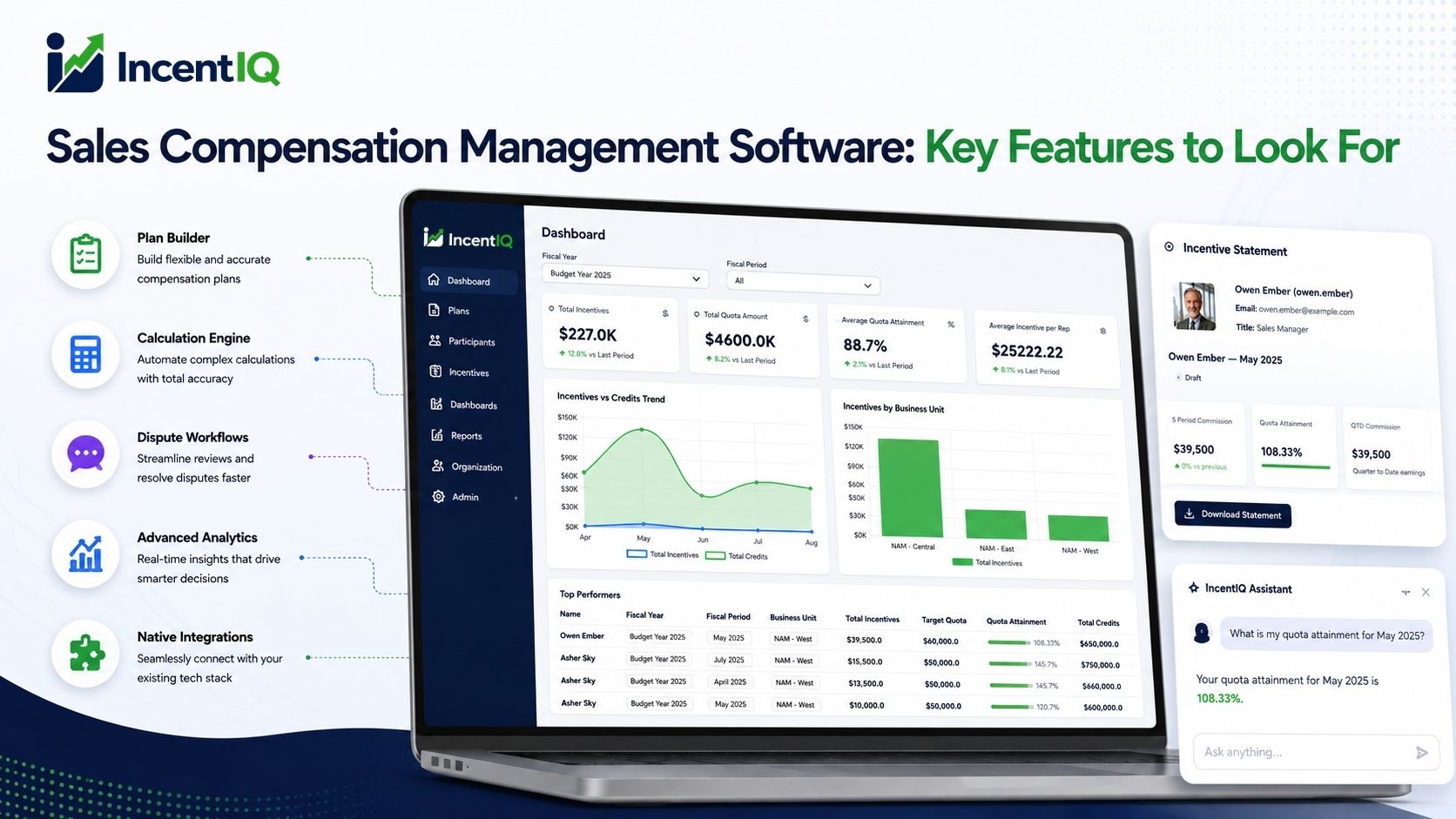
Not all sales compensation management software is built the same way, and the difference shows up fast once a plan gets complicated or a rep files a dispute. If you're evaluating vendors, here are the features that actually separate a platform that scales from one you'll outgrow within a year of signing the contract.
A Plan Builder That Doesn't Require Engineering
The best platforms let RevOps or finance build and modify plans through a no-code interface — tiers, accelerators, splits, and all — without filing a ticket every time a plan changes mid-cycle or a new role launches.
A Calculation Engine Built for Complexity
Handles Tiers, Splits, and Clawbacks Natively
Look for a platform that treats complex compensation logic as a core capability, not an edge case bolted on with custom scripts and one engineer who understands them.
Runs Retroactive Adjustments Cleanly
When a deal is amended after the fact, the platform should automatically recalculate and clearly show what changed — not require a manual patch buried in a spreadsheet tab.
Dispute Workflows Built In
Reps should be able to flag a payout question directly in the platform, with a documented resolution path and status tracking — rather than an email thread finance has to manually keep track of across quarters.
Analytics That Finance and Sales Leadership Trust
Dashboards should show plan effectiveness, payout trends, and rep performance correlation, giving leadership the data to refine plans proactively instead of guessing at what's actually working in the field.
Native Integrations Over Bolt-On Connectors
Whether it's CRM, ERP, or payroll data, integrations should sync reliably and frequently. If your organization runs on a platform like ServiceNow, a native app removes an entire layer of integration risk and ongoing IT maintenance.
Security and Governance Shouldn't Be an Afterthought
Role-based access, approval chains for plan changes, and a full change history matter as much as any calculation feature — especially once compensation data starts feeding finance's accrual reporting.
Conclusion
The right feature set depends on your plan complexity and existing tech stack, but a no-code plan builder, a robust calculation engine, built-in dispute handling, and trustworthy analytics are non-negotiable for any team planning to scale past spreadsheets for good.
