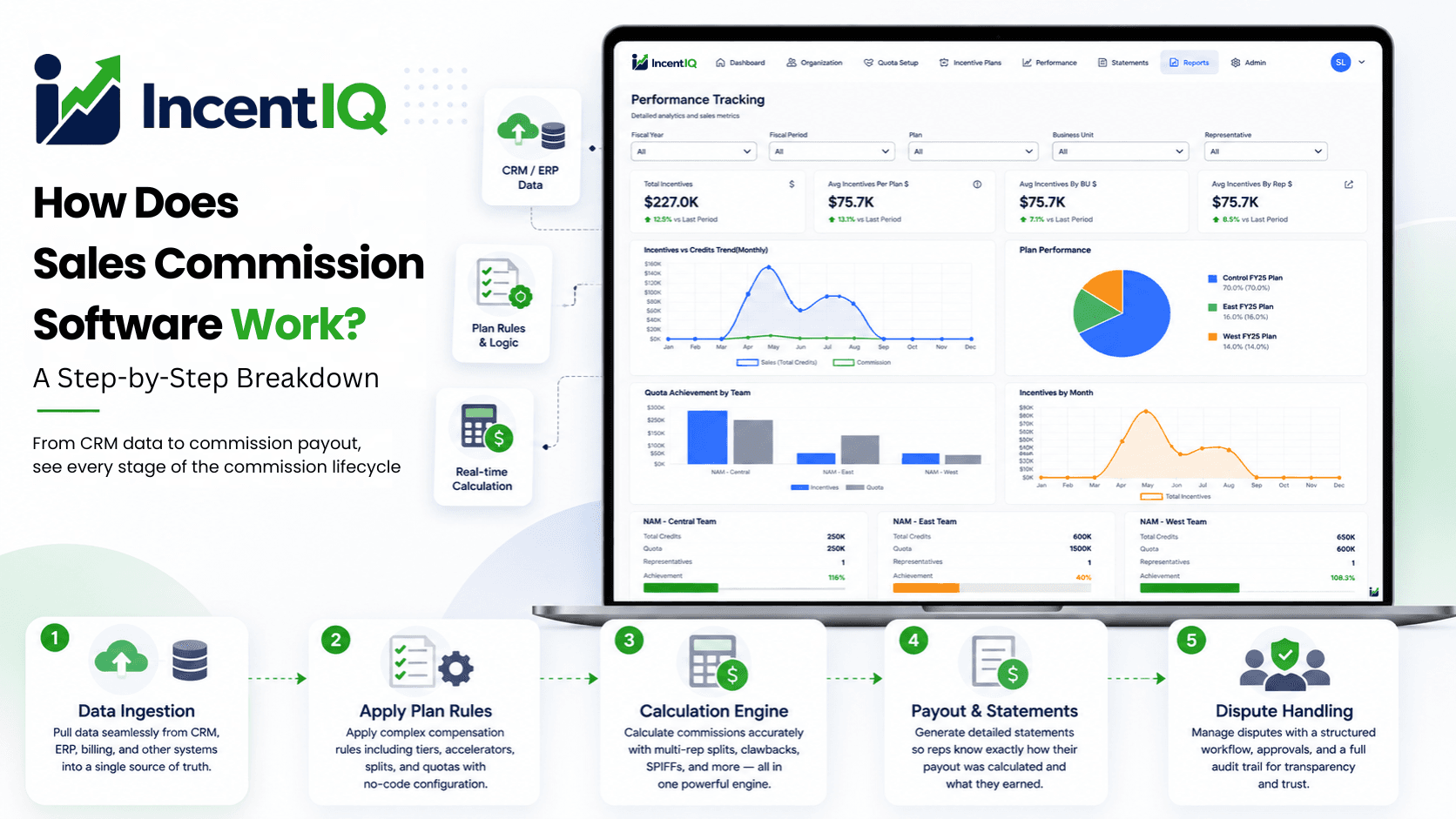
Sales commission software can feel like a black box — data goes in, and a payout number comes out. Understanding what happens between those two points helps RevOps and finance teams trust the numbers and troubleshoot issues faster. Here's a step-by-step breakdown of how modern commission software actually works, from raw data to a rep's final payout.
Step 1 — Data Ingestion
Everything starts with data. Commission software pulls closed-won deals, invoices, and account information from your CRM, ERP, and billing systems, either through native integrations or scheduled imports. The goal is a single, reconciled source of truth, so commissions are always calculated against the same numbers finance uses to close the books.
Step 2 — Applying Plan Rules
Once data is in the system, it's matched against each rep's compensation plan. This is where tiers, accelerators, quota attainment, splits, and product-specific rates come into play. A well-built platform lets RevOps configure these rules without engineering support, so plan changes at the start of a new fiscal year don't require weeks of development work.
Step 3 — Calculation
With rules applied, the engine calculates what each rep owes — factoring in attainment thresholds, multi-rep splits on the same deal, clawbacks for churned accounts, and any SPIFFs earned during the period. This is where manual spreadsheets fail most often, since a single tiered formula across dozens of reps and plan variations is nearly impossible to maintain by hand without errors creeping in.
Step 4 — Payout and Statements
Once calculations are finalized, the platform generates itemized statements for each rep, showing exactly how their number was built — which deals counted, which tier applied, and what was adjusted. Clear, itemized statements are one of the biggest drivers of rep trust, because reps can see the math instead of just receiving a number.
Step 5 — Dispute Handling
Even accurate systems generate questions. A structured dispute workflow lets reps flag a specific line item, route it to the right approver, and track resolution, all with an audit trail attached. This replaces the informal back-and-forth over email or chat that can drag payout disputes out for weeks.
Why This Matters for RevOps Teams
Each of these five steps is a place where manual processes typically break down — mismatched data, outdated plan logic, calculation errors, unclear statements, or disputes with no paper trail. IncentIQ, built natively on ServiceNow, automates this entire lifecycle in one connected system, so RevOps teams get accurate, auditable payouts without stitching together spreadsheets and email threads.
Conclusion
Sales commission software isn't magic — it's a structured pipeline of data ingestion, rule application, calculation, payout, and dispute resolution. Understanding each stage makes it easier to spot where your current process is breaking down, and what to look for in a platform built to scale with your sales organization.
The takeaway
IncentIQ brings incentive data, calculations, and AI into one governed system on  — so compensation is transparent, intelligent, and trusted at enterprise scale.