For most RevOps leaders, incentive compensation starts out simple — a plan document, a spreadsheet, and a few CRM fields. But as headcount grows and plans get complex, that simple system quietly becomes one of the most fragile parts of the revenue engine. This guide breaks down what Incentive Compensation Management means, why traditional tools fail at scale, and what a modern ICM platform needs to deliver.
What Is Incentive Compensation Management?
Incentive Compensation Management, or ICM, is the process of designing, calculating, and administering pay tied to sales performance — commissions, bonuses, SPIFFs, and accelerators. At its core, ICM connects three things: the compensation plan rules, the underlying sales data, and the payout that lands in a rep's paycheck. Done well, it gives finance accurate accruals, gives sales leaders visibility into plan performance, and gives reps confidence they are paid correctly and on time.
Why Spreadsheets and CRMs Break Down at Scale
The Hidden Cost of Manual Tracking
Spreadsheets work fine for a five-person team on one flat commission rate. Add tiered accelerators or team splits, and formulas start breaking. Every new hire or plan update means manually rebuilding the logic — and one wrong cell reference can mean an entire team gets paid incorrectly.
When CRMs Aren't Built for Commissions
Many RevOps teams stretch their CRM to handle commissions using custom fields and workflow rules. But CRMs are built to manage relationships and pipeline, not to run compensation math or maintain audit trails. As plans get more sophisticated, CRM-native tracking runs out of room fast, with no clean history of why a payout was calculated the way it was.
What a Modern ICM Platform Should Do
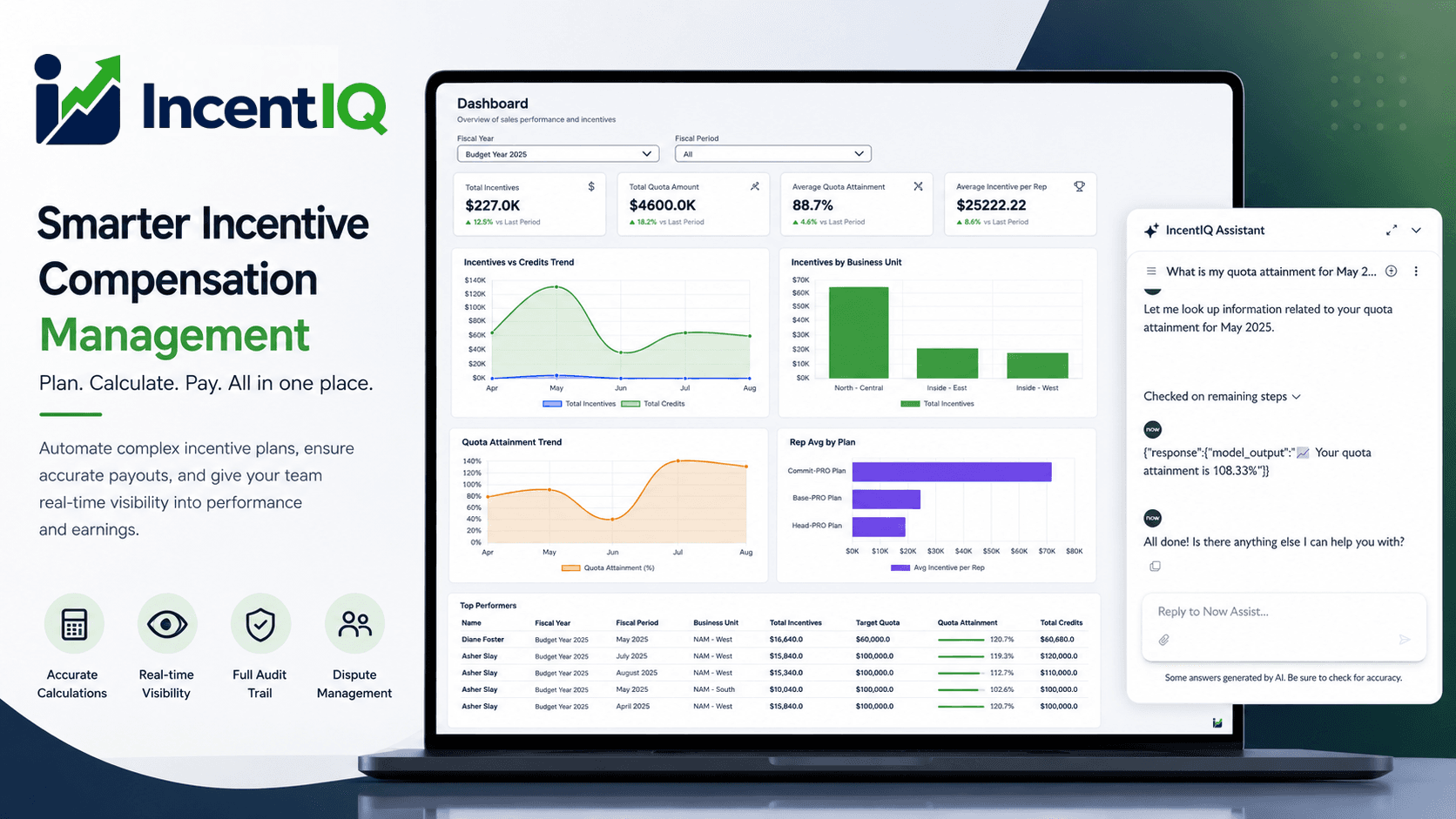
A purpose-built ICM platform does more than calculate payouts. It ingests data automatically from CRM, ERP, and payroll systems, supports no-code plan design for tiers and splits, gives reps real-time payout visibility, maintains a full audit trail, and provides structured dispute workflows — turning compensation from monthly anxiety into a transparent, trusted process.
Why Native ServiceNow ICM Changes the Game
IncentIQ builds ICM natively on ServiceNow rather than bolting it on as a separate system. Compensation data lives alongside the HR, IT, and sales data your organization already manages, with the same login, governance, and security model — no separate integration to maintain, no reconciliation gap. For RevOps leaders scaling compensation without scaling headcount, that's the difference between managing ICM and constantly firefighting it.
Conclusion
Incentive Compensation Management isn't just about paying commissions correctly — it's about giving RevOps, finance, and sales leadership a shared, trustworthy view of how pay connects to performance. As plans grow complex, spreadsheets and CRM workarounds can't keep up. A native ServiceNow ICM platform like IncentIQ gives teams the accuracy and scalability to turn compensation into a strategic advantage rather than a monthly scramble.
The takeaway
IncentIQ brings incentive data, calculations, and AI into one governed system on  — so compensation is transparent, intelligent, and trusted at enterprise scale.